
Blog
Wedding Rehearsal Checklist: What Couples Should Prepare

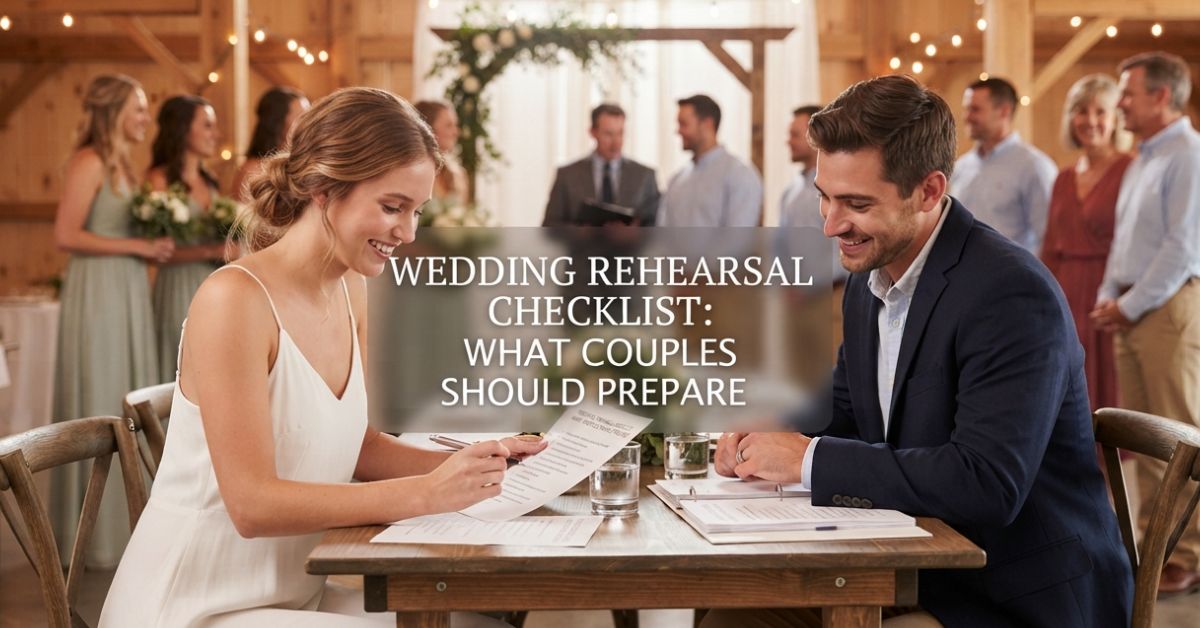
In between selecting a cake’s flavor and preparing your seating plan, the wedding rehearsal can tend to be treated as an extracurricular activity. This is an error. A properly-run rehearsal is the only time that transforms anxiety into calm confidence. It’s the closest thing to a rehearsal the most famous walk you’ve ever taken. Couples arriving with a wedding rehearsal checklist on hand will spend the hour absorbing signals and blocking and not fumbling to determine the right person to stand where.
This guide will walk you through all the important things to prepare before gathering your group for a final run of practice, including what you should bring, who you should invite, how your evening usually goes down, and little etiquette rules to ensure that things are moving.
Why the Rehearsal Earns Its Spot on the Calendar
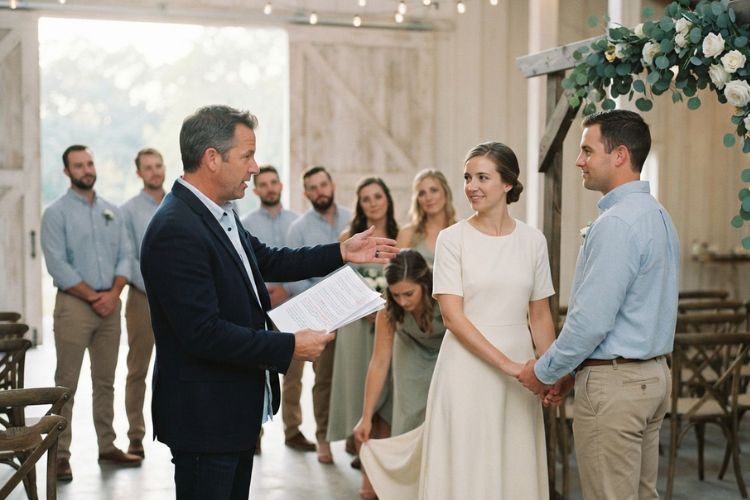
A rehearsal for a ceremony isn’t just about learning lines, and nobody is making vows before the time. It’s about memory. Your wedding guests learn their entry order, and your officiant is familiar with the acoustics in the room, and you’ll have an opportunity to notice anything that is off when it’s happening in front of 200 guests. Don’t miss it, and even the tiniest hiccup- a flower girl who stops in mid-air or a guest who is unable to locate the microphone- will become an unrehearsed, live moment during your wedding day.
This is also where the coordinator you’ve hired earns their keep. The wedding planner role during rehearsal isn’t just standing at the back with a clipboard; they’re choreographing the physical movement of your ceremony, from processional spacing to where the bouquet gets handed off, so your officiant can focus purely on the words.
Wedding Rehearsal Checklist: What to Pack and Prep
Before you even set a date, a handful of essentials need to be locked in. Think of this as your rehearsal packing list:
- A confirmed space. Your actual venue is ideal, but a backyard, community room, or even a parking lot works if access isn’t available beforehand.
- A full hour, minimum. Even a simple ceremony benefits from buffer time for questions, latecomers, and a second run-through.
- Your officiant and coordinator, together. They should run the rehearsal jointly, one handling the choreography, the other the ceremony script.
- Every person with a ceremony role. That means your wedding party, readers, ushers, anyone walking a pet down the aisle, and parents of young children in the lineup.
- Physical props. Bring your aisle runner, unity ceremony items, or anything else that needs practicing, like a ring bearer’s basket or a flower girl’s petals.
Getting this list sorted early avoids one of the more common wedding planning mistakes: realizing two days out that half your bridal party is unavailable the evening you’d already booked for rehearsal dinner reservations. It’s a small gap in planning, but it’s one that ripples through your entire wedding rehearsal timeline if it’s caught too late.
Building Your Wedding Rehearsal Timeline
A smooth rehearsal doesn’t start the night before your wedding; it starts months earlier. Here’s a realistic wedding rehearsal timeline to work backward from:
- 3–6 months out: Lock in your rehearsal date, time, and space, ideally at your ceremony venue a day or two before the wedding. Cross-check the date against your officiant, coordinator, and wedding party’s availability, and start scouting rehearsal dinner venues nearby.
- 2–4 weeks out: Reconfirm attendance with everyone involved, gather any props you’ll need to bring, and finalize the ceremony decisions you’ll actually be rehearsing: processional order, unity traditions, who’s reading what. This is also a natural moment to double-check details like your wedding colors are reflected consistently across programs, florals, and any signage your rehearsal will help you visualize in the space.
- The day of: Arrive early enough for your officiant and coordinator to walk the space and make quick adjustments, then bring everyone together for the actual run-through. This final stretch of the wedding rehearsal timeline is where all the earlier planning quietly pays off.
What to Do at Wedding Rehearsal: A Walk-Through
Once everyone’s gathered, here’s roughly what to expect when figuring out what to do at wedding rehearsal:
Introductions. Your officiant and coordinator open by explaining how the evening will run, so nobody’s guessing at what comes next.
The walk-through. Led by your coordinator, this is pure choreography, where you gather, how you enter, pacing down the aisle, where you stand, and how the recessional flows. It’s the closest thing to blocking a scene, and it’s where spacing issues get caught before they’re a problem on camera.
The talk-through. Your officiant takes over here, narrating the ceremony’s structure so everyone knows their cues: when rings are exchanged, when vows are handed off, when readers step up, when the marriage license gets signed. Nothing is performed in full; this is a preview, not a premiere.
The run-through. With less hand-holding this time, you move through the whole sequence as if it were the real thing. Most couples need two or three passes before everyone feels steady.
Final questions. Before you head to dinner, this is the moment to ask anything you’re still unsure about. If you walk in unsure what to do at the wedding rehearsal, you should walk out with every cue mapped in your head.
Wedding Rehearsal Etiquette Every Guest Should Follow

Good wedding rehearsal etiquette keeps the evening efficient and low-stress for everyone involved:
- Arrive on time, or a few minutes early. A late wedding party member can stall the entire run-through.
- Stay off your phone during the walk-through. Distracted attention is how blocking mistakes slip through unnoticed.
- Save questions for the designated moment rather than interrupting mid-sequence.
- Respect that this is a working rehearsal, not a full performance, so save the enthusiasm for the actual day.
- Thank your officiant and coordinator before you leave. They’re donating an evening to make your ceremony run smoothly.
Following this etiquette isn’t about formality for its own sake; it’s what lets your officiant and coordinator get through everyone’s questions in one focused hour instead of three scattered ones. Couples who set clear wedding rehearsal etiquette expectations upfront, even something as simple as a quick reminder text, tend to have noticeably smoother evenings.
Frequently Asked Questions
How long before the wedding should the rehearsal happen?
Most couples schedule it one to two days before the ceremony, often the evening before, right ahead of the rehearsal dinner.
Who actually needs to attend?
Anyone with a role in the ceremony: the couple, wedding party, officiant, coordinator, readers, ushers, and any family members walking down the aisle.
Do we rehearse the vows themselves?
No. The rehearsal covers structure, cues, and movement; your actual vows stay reserved for the wedding day.
What if our venue isn’t available for rehearsal?
Any comparable open space works fine: a backyard, a community hall, or even a parking lot, since the goal is practicing movement and timing, not the exact location.
Working through a wedding rehearsal checklist early takes one more unknown off your plate, and that’s exactly the kind of quiet, behind-the-scenes planning Wisteria Weddings & Events builds into every couple’s timeline. If you’d rather hand off the logistics entirely, reach out to Sharon to talk through your ceremony details.