
Blog
How Long Does It Take to Plan a Wedding? A Realistic Timeline

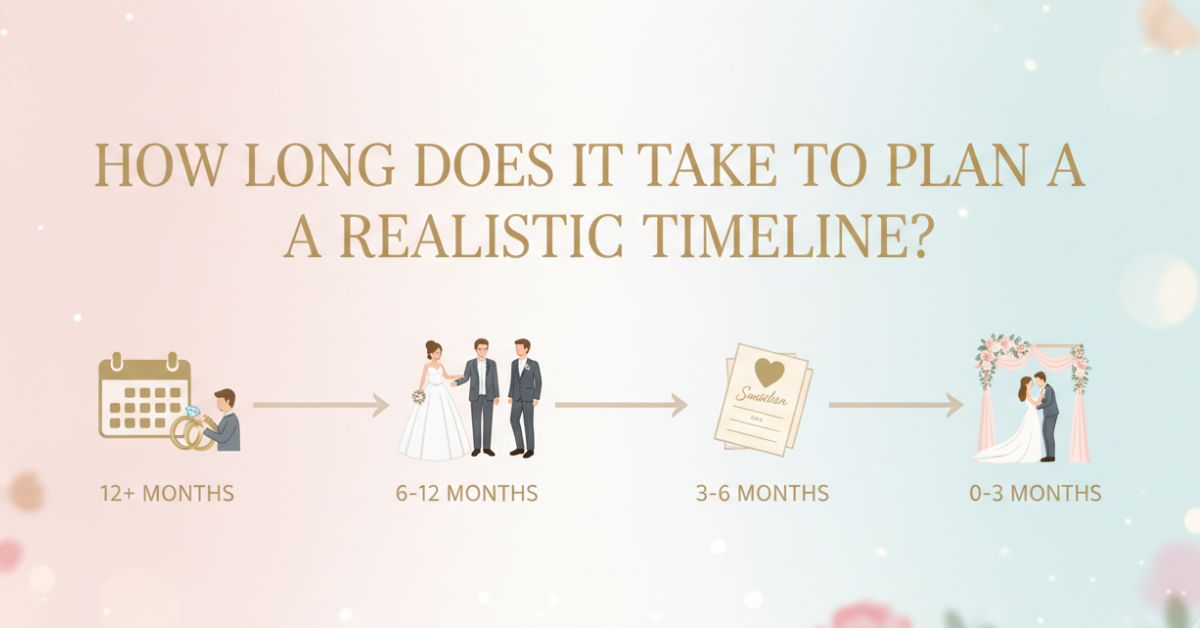
Planning a wedding rarely follows the same schedule for every couple. Some people begin making arrangements more than a year in advance, while others organize everything in just a few months. If you’re trying to figure out how long to plan wedding preparations, the answer depends on factors like your budget, venue availability, and the size of your guest list.
Rather than focusing on an exact number of months, it helps to have a realistic plan and tackle tasks in the right order. This article explores the average time to plan a wedding, outlines a practical schedule, and explains how long it takes to plan wedding details from the first booking to the final celebration.
How Long Does It Usually Take to Plan a Wedding?

For many couples, the average time to plan a wedding falls between 12 and 18 months. That gives enough time to compare venues, book vendors, send invitations, and make decisions without unnecessary stress.
Still, plenty of successful weddings happen in six months or even less. Smaller guest lists and flexible dates often make planning faster. If you are asking how long to plan wedding preparations for your own event, think about the complexity of your celebration instead of comparing yourself to others.
A large formal reception with hundreds of guests will naturally take longer than an intimate ceremony. Your location also matters because popular venues and photographers can book out many months in advance.
A Realistic Wedding Planning Timeline
Every wedding is different, but following a structured wedding planning timeline helps keep important tasks in order and reduces last-minute pressure.
1. 12 Months or More Before the Wedding
The first step is setting your budget. Decide how much you can comfortably spend before looking at venues or vendors. This makes later choices much easier.
Next, create a rough guest list and choose possible wedding dates. Once those are settled, book your venue as early as possible. Many sought-after locations have limited availability.
This is also a good time to hire key professionals such as photographers, caterers, or entertainers. Understanding the wedding planner role can also help if you want expert guidance with scheduling, vendor communication, and event coordination from the beginning.
2. 6 to 9 Months Before the Wedding
By now, your plans should start taking shape. Shop for wedding attire because alterations often require extra time. If custom clothing is involved, order it well in advance.
Finalize important services, including catering, music, and photography. You can also choose decorations, flowers, and your overall style for the event.
Many couples send save-the-date cards during this period, especially if guests will be traveling from other cities or countries.
At this stage, people often ask how long it takes to plan wedding details once the venue is secured. In reality, much of the work happens here through dozens of small decisions that gradually complete the picture.
3. 3 to 5 Months Before the Wedding
Now it is time to focus on guest communication and logistics. Order invitations, arrange transportation if needed, and confirm hotel options for visiting family and friends.
Review your menu with the caterer and finalize rental items such as tables, chairs, or linens. Schedule clothing fittings and beauty appointments early enough to allow adjustments if needed.
Many couples discover that staying organized during these months makes planning wedding activities feel much more manageable. Instead of rushing, they simply follow the checklist one step at a time.
4. 1 to 2 Months Before the Wedding
With only a couple of months left, things start to feel more real. By this point, most of your RSVPs should be coming in, making it easier to finalize the guest list and give vendors an accurate headcount.
It is also a perfect time for creating a seating plan and contacting each of the vendors to get information about their arrival times, services, and payment. A brief analysis will help you avoid any last-minute issues.
Following your wedding planning schedule at this stage will allow you to put everything in order. This will save you from having to deal with unforeseen problems on the final day.
5. Final Week Before the Wedding
The final week should be about preparation, not major decision-making. Pack everything you need for the ceremony and reception, including important documents, accessories, and emergency supplies.
Review the event schedule with vendors and your wedding party. Confirm arrival times and contact information. If any issues come up, address them quickly and move on.
This is also the time to step back and enjoy the moment. Couples who spend months wondering how long to plan wedding details often forget that the goal is to celebrate, not to create a perfect event.
What Can Speed Up or Slow Down the Planning Process?

Several factors influence the amount of time required to plan a wedding.
1. Factors That May Extend the Timeline
Popular venues are one of the biggest reasons planning takes longer. Some locations are booked more than a year in advance.
Large guest lists can also add complexity. More guests usually mean more coordination, seating arrangements, invitations, and budget considerations.
Custom dresses, personalized décor, and destination weddings often require additional planning time. Shipping schedules, travel arrangements, and vendor coordination can easily add months to the process.
2. Factors That Can Shorten the Timeline
Smaller weddings are generally easier to organize. Fewer guests mean fewer decisions and less coordination. Flexible dates can also help. Couples willing to choose off-peak seasons or weekdays often find better vendor availability.
Ready-made décor and attire reduce waiting periods. All-inclusive venues can simplify the process as well because many services are handled under one contract. If your plans are straightforward, how long it takes to plan wedding arrangements may be much shorter than the average estimate.
Can You Plan a Wedding in Less Than Six Months?
Yes, it is absolutely possible to plan a wedding in less than six months. Many couples do it successfully, especially if they stay organized and make important decisions early. The first priority should be booking the venue and key vendors such as the officiant, photographer, and caterer. Once those essentials are in place, the remaining details become much easier to manage.
A shorter planning window often means letting go of the idea that everything has to be perfect. Instead of holding out for one specific venue or date, consider what is available and works well for your budget. You can also simplify the décor, trim the guest list, or skip unnecessary extras to make planning easier and faster.
It also helps to avoid common wedding planning mistakes like postponing major bookings, changing plans repeatedly, or setting an unrealistic budget. These issues can slow down progress more than the timeline itself. With a clear checklist and focused decisions, a beautiful wedding can come together in just a few months.
Signs Your Wedding Planning Is on Track
If your venue, photographer, caterer, and other key vendors are booked, you are in good shape. Having a clear budget also helps you avoid delays and stay focused on your priorities.
Another positive sign is that invitations have been sent and RSVPs are coming in on schedule. Your guest count should become more accurate as the wedding date gets closer.
By the final week, only small details should remain. If you are still making major decisions, it may be time to simplify your plans for most couples; staying organized matters more than exactly how long to plan wedding preparations.
Conclusion
There is no single answer to how long to plan wedding celebrations because every couple has different priorities. Some need more than a year, while others create a memorable event in just a few months.
The best approach is to start with a realistic schedule, book important vendors early, and tackle tasks in stages. Whether your timeline is long or short, steady progress will make the process feel much more manageable. With the right plan, your wedding can come together smoothly without unnecessary stress.
FAQs
Is 12 months enough time to plan a wedding?
Yes. Twelve months is enough time for most weddings. It allows couples to book vendors early and make decisions without feeling rushed.
Is 6 months enough to plan a wedding?
Yes. Many weddings are planned successfully within six months, especially when guest lists are smaller and dates are flexible.
What should be booked first when planning a wedding?
The venue should usually be booked first. Once the date and location are secured, other vendors can be scheduled around them.
What is the ideal time to send out wedding invitations?
Most invitations are usually sent out six to eight weeks prior to the wedding date. For destination weddings, earlier notification might be required.
Can a wedding planner shorten the wedding planning process?
A wedding planner will be able to save some time through communication with vendors and organization of meetings.