
Blog
How to Create a Wedding Day Rain Plan for an Outdoor Ceremony

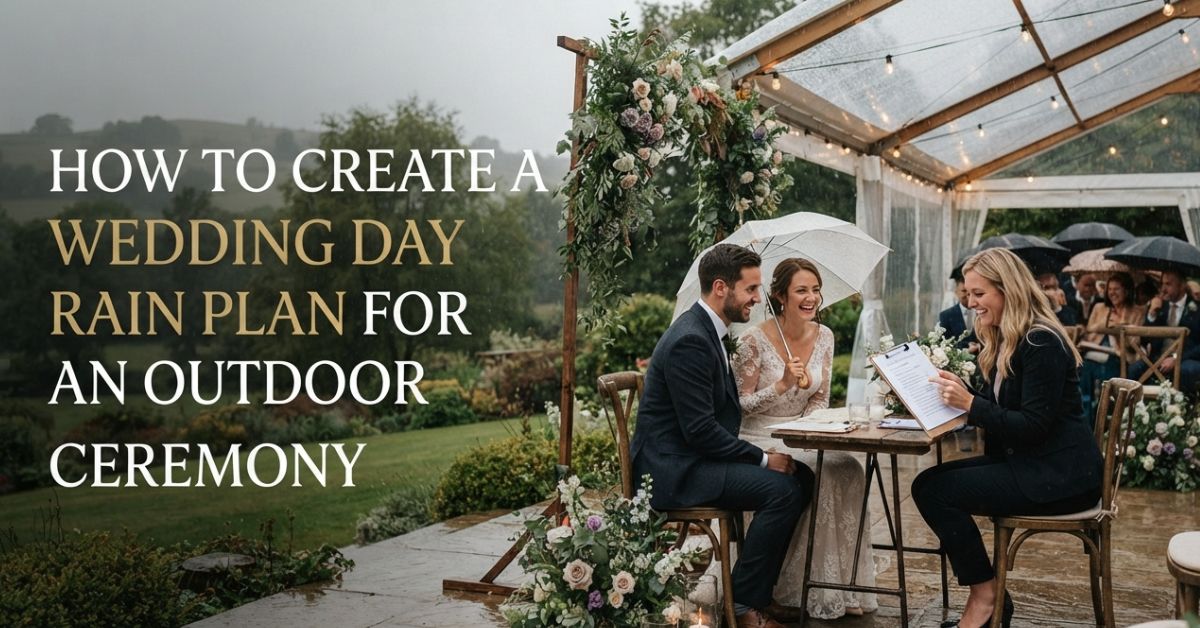
You’ve booked a beautiful outdoor venue, chosen your flowers, and imagined exchanging vows surrounded by family and friends. Everything seems to be coming together until the weather forecast starts showing rain on your wedding date. Now you’re thinking about what will happen to your ceremony if the weather doesn’t cooperate.
Rain doesn’t necessarily mean you have to give up your outdoor wedding plans. With a wedding day rain plan, you can prepare another ceremony arrangement while keeping the details you’ve already organized. At Wisteria Weddings & Events, we understand how important these arrangements are for couples planning an outdoor celebration. Here are some practical ways to prepare for rain before your wedding day arrives.
Check Your Venue’s Options Before the Forecast Changes

When you’re looking at outdoor wedding venues, don’t forget to ask where the ceremony would take place if it rained. The venue might have an indoor room, a covered terrace, or another space you could use. Ask to see it before making your booking, and find out whether you’ll have to pay extra if you decide to move the ceremony inside.
You’ll also need to think about how many people the alternative space can hold. A covered patio might be fine for 30 guests, but what if you’re inviting 100? Your outdoor wedding rain plan should take your guest numbers into account. If you haven’t decided who to invite yet, our guide on How to Make a Wedding Guest List can help you work that out before you settle on a venue.
Arrange a Tent Before Rental Options Become Limited
If your venue doesn’t have an indoor ceremony space, renting a tent may be another option. Speak with the rental company about the size you’ll need, whether sidewalls are available, and how the tent will be secured. You should also ask about flooring, particularly if your ceremony will take place on grass.
Include tent rental costs in your wedding day rain plan rather than leaving them until the final week. Ask about deposits, delivery arrangements, cancellation policies, and any additional setup charges. Remember that tents aren’t necessarily safe during thunderstorms or strong winds, so you’ll still need to follow the venue’s emergency weather procedures.
Prepare for Rain and Keep Your Guests Comfortable
Decide When to Move the Ceremony Indoors
Don’t wait until your guests start arriving to decide whether the ceremony should move indoors. Ask your venue coordinator how much time they’ll need to set up the other space. Moving chairs, flowers, and sound equipment can take a few hours, depending on the venue.
As part of your wedding weather contingency plan, agree on a time when you’ll make the final decision. Keep an eye on the forecast during the week leading up to your wedding. If you’re getting married in South Carolina or North Carolina during the warmer months, remember that afternoon thunderstorms are common. Check official weather alerts before deciding to go ahead outdoors.
Make Arrangements for Your Guests
Think about what your guests will experience if it rains. They may have to walk from the parking area in their formal clothes, and wet grass or muddy paths can make that difficult. Ask your venue whether they can put down entrance mats or provide a covered walkway.
Your rain plan for outdoor ceremony should also consider older relatives and guests who have difficulty walking. You could keep umbrellas near the entrance and arrange a dry place for everyone to wait before the ceremony. If the reception is in another part of the venue, make sure guests have a safe way to get there without walking through heavy rain.
Protect Your Flowers, Decorations, and Ceremony Equipment
Your wedding flowers and decorations may need a few changes if the ceremony moves indoors. Ask your florist whether the arrangements can be transferred to another location and whether the original ceremony arch will fit inside. Delicate flowers, paper programs, welcome signs, and fabric decorations should have a dry place to go.
Electrical equipment also needs attention. Speak with your DJ or musicians about protecting microphones, speakers, and cables from moisture. A complete wedding day rain plan should identify where ceremony documents, personal belongings, and other important items will be kept if the original setup can no longer be used.
Make Sure Your Vendors Know About the Change of Plans
Your photographer, florist, officiant, and musicians all need to know where the ceremony will take place if it rains. For example, your florist may need to move the flower arrangements indoors, while your photographer might have to find another spot for wedding pictures. Speak with each vendor beforehand so they know what to do if the ceremony location changes.
Your wedding weather contingency plan should also explain who will contact the vendors and let them know about any changes. You can ask your wedding planner or venue coordinator to take care of this. That way, you won’t have to spend your wedding morning making phone calls and explaining the new arrangements to everyone.
Let Your Guests Know About the Ceremony Location
If you decide to move your ceremony indoors, make sure your guests hear about it before they arrive. You can update your wedding website or send a short message with the new location and any changes to parking or entrance arrangements. If the ceremony is still at the same venue, explain which entrance guests should use.
Include guest communication in your wedding day rain plan so you already know who will share these updates. Ask a family member, friend, or wedding coordinator to handle the messages. You can also arrange for someone from the venue to stand near the entrance and direct guests to the right place.
Leave Extra Time for Weather-Related Delays

If you have to move your ceremony indoors because of rain, you might need to change a few things in your wedding schedule. Your guests could take longer to reach the ceremony space, and your photographer may need to find another place for pictures. Vendors might also need more time to set everything up. Talk about these possibilities beforehand and leave some extra time in your schedule in case things don’t go as planned.
You should also consider the financial side of changing arrangements. Tent rentals, additional flooring, or extra venue services can increase your expenses. Our guide on How to Build a Wedding Budget can help you organize these costs and set aside money for unexpected arrangements before the wedding day arrives.
Conclusion
You’ve spent months planning your outdoor wedding, so seeing rain in the forecast can be disappointing. But if you’ve already spoken with your venue, arranged a backup space, and told your vendors what to do, there won’t be as much to figure out on the day. Having an outdoor wedding rain plan ready means you can deal with the weather without letting it take over your celebration.
As your wedding date gets closer, go over the arrangements with your venue and make sure everyone knows what to do if rain is expected. Having a wedding day rain plan ready means you can spend less time dealing with unexpected changes and more time enjoying your celebration with family and friends.
FAQs
What should you do if it rains during an outdoor wedding ceremony?
If it starts raining, you may need to move the ceremony to a covered area or wait a little while for the rain to stop. It depends on how heavy the rain is and what your venue allows. If there’s lightning or a severe storm, everyone should move to a safe indoor location.
How early should you prepare a rain plan for your wedding?
It’s best to start when you’re booking your venue. Ask about indoor spaces, tent rentals, and any extra charges. You should have your rain plan for outdoor ceremony arrangements sorted out well before the wedding so you aren’t trying to organise everything at the last minute.
Can you still have an outdoor wedding if rain is forecast?
Yes, you may still be able to have your ceremony outdoors if the forecast only shows light showers. However, heavy rain can leave the ground muddy and make seating difficult. If thunderstorms or strong winds are expected, moving indoors is usually the safer choice.
Who decides whether to move a wedding ceremony indoors?
Usually, you and your partner can discuss the decision with your wedding planner and venue coordinator. It’s a good idea to agree on who will make the final call beforehand. Keep in mind that the venue may require you to move indoors if the weather becomes unsafe.